
Something happened that made me take a much closer look at the clothes we wear. It led me further down the path of choosing natural fabrics whenever possible.
A few weeks ago, I’d started making some healthier choices for myself and, little by little, I started losing weight. Nothing dramatic. Just a gradual change that I was happy to see.
Around that same time, I bought a package of 100% organic cotton underwear and started wearing those. Then I ran out.
I hadn’t done laundry yet, so I went back to wearing the polyester underwear I already had, and something very strange happened.
I stopped losing weight.
Within a couple days, the number on the scale actually started creeping back up.
Then I did laundry. The cotton underwear was clean again, so I switched back.
The weight started going back down.
A few days later, I ran out of the cotton underwear again and went back to the polyester. The same thing happened.
I stopped losing weight and the number began creeping back up.
I bought another package of cotton underwear and haven’t noticed that particular problem again.
Now, I realize this is only my personal experience, and I can’t tell you with 100% certainty the polyester underwear caused the change.
But the pattern was unusual enough that I couldn’t ignore it.
And it made me start asking different questions like: What are the fabrics we put against our skin actually made of, how are they made, and could they be affecting our hormones in some way?
I’d already been working toward choosing natural fabrics for our bedding. But this experience moved the issue much higher on my priority list.
The more I’ve learned about synthetic fabrics, the more I’ve understood why this is worth paying attention to.
What Exactly Are Synthetic Fabrics?
When we hear the word “fabric,” we tend to think about something soft and harmless.
But not all fabrics begin with a plant or animal.
Many of the fabrics commonly found in our closets today are actually made from synthetic polymers. In other words, they’re essentially plastic-based materials that have been turned into fibers.
Polyester is a good example.
Most polyester is made from polyethylene terephthalate, or PET, a type of plastic also used in many bottles and food containers. The material is processed into fibers, which are then stretched and spun into yarn and fabric.
Other common synthetic fibers include:
- Polyester
- Nylon
- Acrylic
- Polypropylene
- Spandex or elastane
Then there are fabrics such as rayon, viscose and modal. These begin with natural cellulose, often from wood pulp, but undergo substantial chemical processing to turn that cellulose into usable textile fibers.
So when I talk about choosing natural fabrics, I’m primarily talking about fibers that come directly from natural sources, such as cotton from a plant, flax for linen, and wool from sheep.
Why Does Fabric Choice Matter?
This is where my interest in fabrics goes beyond environmental concerns.
It is concerning that the polyester in my shirt may eventually contribute to plastic pollution. However, I’m much more interested in what is happening between that fabric and my body while I’m wearing it.
Our skin is our largest organ.
We’re not simply wearing our clothes for a few minutes. We’re surrounded by textiles all day long.
Our underwear, along with bras, shirts, and pants sits directly against our skin for hours – sheets and pajamas surround us while we sleep.
And babies and children can spend much of their day wrapped in clothing, blankets and other textiles.
It seems reasonable to ask what we’re exposing ourselves to during all of that contact.
Turns out, the concern isn’t necessarily the fiber itself, but also how the fabric is made.
It’s Not Always Just the Fabric
A piece of clothing can contain far more than the fiber listed on the tag.
Textiles can undergo numerous treatments during manufacturing to give them particular qualities.
They may be dyed, treated for wrinkle resistance or to repel water and stains.
They may contain finishes designed to make the fabric softer, more durable or resistant to odors.
Some textiles can also contain plasticizers, flame retardants, dyes and other chemical compounds.
And some of these chemicals are substances researchers have specifically investigated for their potential to interfere with biological processes, including the endocrine system.
What are endocrine disruptors?
Our endocrine system is essentially our body’s hormone communication system.
Hormones help regulate an enormous number of processes, including metabolism, reproduction, growth, development, sleep and stress responses.
Endocrine-disrupting chemicals, often called EDCs, are chemicals that can interfere with normal hormone signaling.
And this is one of the reasons I’m paying more attention to what touches our skin.
Research has identified endocrine-disrupting chemicals in a variety of consumer products, including textiles. Studies have detected compounds such as bisphenols, phthalates and certain other chemicals in clothing and other fabrics.
That doesn’t mean that wearing a polyester shirt automatically exposes you to a harmful dose of an endocrine disruptor.
However, this area specifically is where I wonder if the organic cotton underwear really made a difference for me. If we look at female anatomy, the ovaries are part of the endocrine system, and the uterus and it’s main opening contain tissues that respond to the endocrine system. All things surrounded by fabric.
Was it possible my body had a “break” when I wore the cotton underwear because it wasn’t fighting system disruptors and that’s why I saw more consistent weight loss?
I found the research compelling enough to make me ask whether I really need to choose those exposures if I have other options.
And that’s really the philosophy behind the changes I’m making in our home.
Not fear. Just fewer unnecessary exposures when I have a practical alternative.
How I’m Choosing Natural Fabrics Instead
Fortunately, there are some wonderful natural fabric options.
Cotton
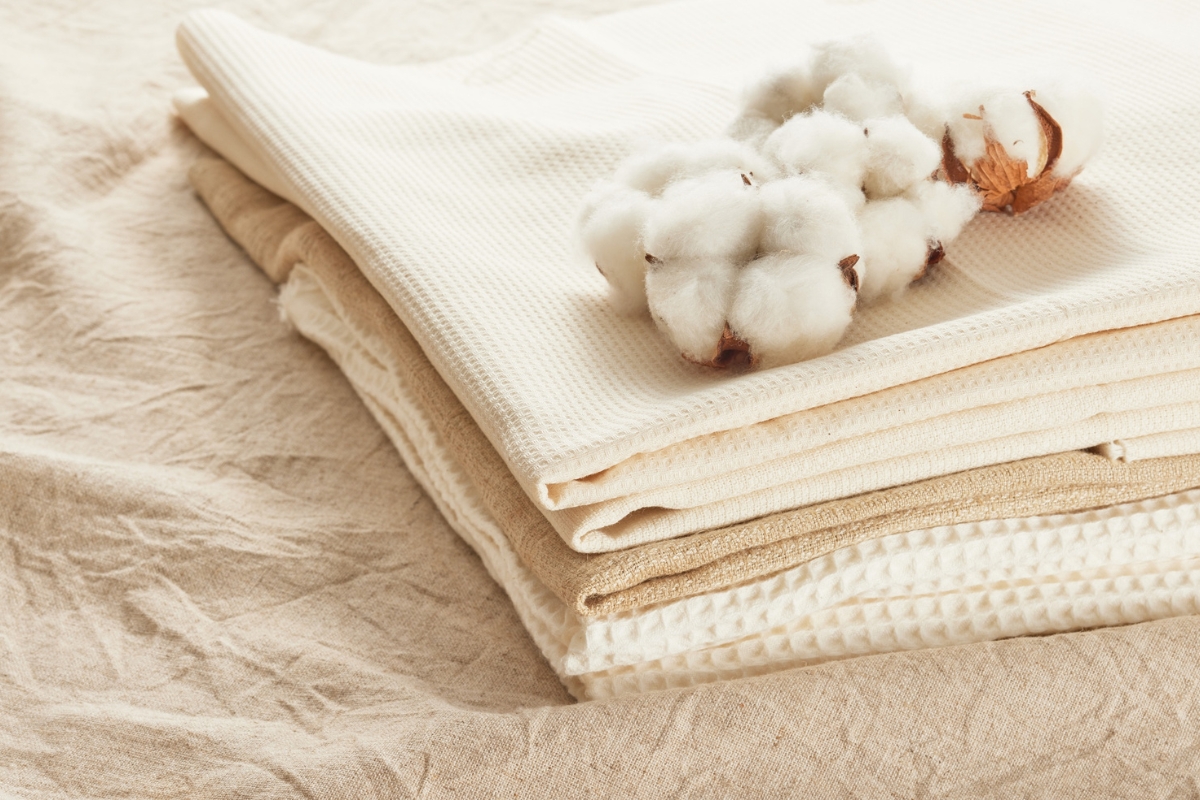
Cotton comes from a plant and is one of the easiest natural fibers to incorporate into everyday life. It’s breathable, comfortable and versatile. For me, cotton has become the obvious starting point – as I’m able.
Clothing: underwear, pajamas, shirts, pants, socks
Household: bedding, throw blankets, towels
When I can find a good-quality 100% cotton option that fits our needs and budget, that’s increasingly what I’ll choose.
I’m also specifically looking at the 100% part.
Because a product can have “cotton” in enormous letters on the front of the package and still contain polyester, nylon or spandex.
Linen
Linen is made from the flax plant. It’s breathable, lightweight and durable, but is known for wrinkling.
I only have a few shorts made with linen, and it’s rare that dry clothes get folded right away anyway, so I’m okay with some wrinkles (sorry Grandma!).
Wool
Wool comes from sheep and is another natural fiber with some wonderful qualities. It’s warm without necessarily being heavy, breathable and naturally well suited to regulating temperature.
We really only have a few wool socks for the colder months and maybe a sweater or two. It’s not a fabric I choose often because I often find it itchy, and some of my kiddos are texture sensitive like I am.
It’s still a great choice if those things don’t tend to bother you.
What I Look For When Shopping
This is probably the most practical part of the whole conversation, because you can’t always trust the words on the front of the package.
Don’t stop at “cotton”
If a package says “cotton underwear,” I don’t assume that means it’s 100% cotton. The front of a package is often used for marketing. If something says “natural,” “eco-friendly” or even “cotton,” I still check the label by turning it over and reading the fiber content label.
I’m looking for: 100% cotton
Sometimes it will say: Cotton blend.
That could mean a garment is 95% cotton/ 5% spandex or 60% cotton/40% polyester.
I’m not totally against blends. There are times when a little bit of stretch helps out. At the end of the day, I just want to know what I’m actually purchasing.
TO GET YOU STARTED
I’ve been noticing more stores, like Walmart and Target, are offering a wider selection of 100% cotton clothing, beddings, and towels, which is awesome! If you’re looking for underwear ideas to get started with right away, here are some things I’ve found on Amazon. Some of these are affiliate links, which means I may earn a commission at no extra cost to you. Thank you for your support!
Transition Doesn’t Happen Overnight
I want to say this because I think it’s easy for conversations like this to become all or nothing, but that’s not my goal here. We already own synthetic clothing, and have other textiles made from synthetic materials.
Unless something is proven extremely hazardous, it’s not plausible for me to toss everything out and start from scratch.
The only items I made adjustments to right away, were making sure we all had cotton underwear, pajamas, and bed sheets/quilts.
Sleep is when our bodies are doing a tremendous amount of repair and restoration. If I’m trying to create a healthier environment for our bodies, I want to pay attention to what we’re surrounding ourselves with during those hours, too.
Aside from that, I’ll work on changing what I buy going forward.
When something wears out, I’ll choose natural fabrics. If I have two choices and one is 100% cotton, I’ll probably choose the cotton. When I’m buying something that will be against our skin for eight hours a night, I’m going to pay a lot more attention to the label.
A Little More Intention, A Little Less Exposure
I don’t know exactly what was happening with my weight when I noticed that strange pattern with my underwear. Maybe there was a connection, maybe there wasn’t.
But I do know it made me stop and look more closely, and sometimes that’s all it takes to change the way we shop.
I’m already careful about the ingredients we bring into our kitchen.
I’m thoughtful about the products we use to clean our home.
And now I’m becoming more thoughtful about the fabrics we surround our bodies with, too.
Make it a goal to focus on small changes that can turn into big improvements – over time.
Stay Connected!
Encouragement for Faith & Everyday Life
Life can feel full with faith, health, home, and all the small things in between. The newsletter is a simple way to stay connected through new blog posts, encouragement, occasional shop news, and free tools that support intentional, everyday living.
A glimpse of the free tools



Thank you for sharing such a thoughtful and honest post, Peggy. Your story about the cotton underwear and the pattern you noticed really made me stop and think about what we put against our skin every day. I had not considered that a label saying cotton might still mean a blend, so your tip to look for 100% cotton specifically is one I will use when shopping. The gradual approach you describe — changing what you buy going forward rather than replacing everything at once — feels very sensible and doable. I appreciate the practical list of brands and the reminder that small changes can add up over time.
I’m so glad it was helpful! And you’re right, small steps add up to big changes overtime too. 🙂